

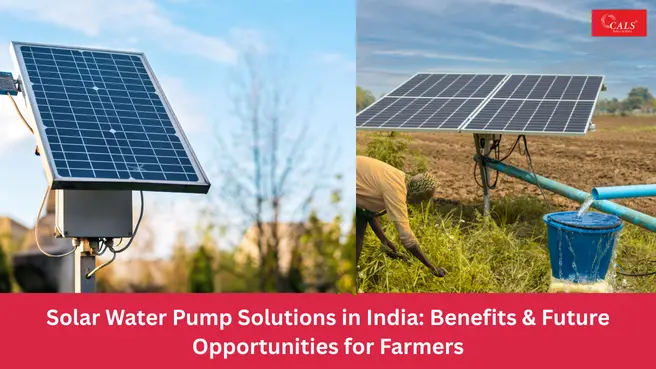
The future of Indian agriculture depends on cost-efficient, reliable, and sustainable irrigation solutions. With rising diesel prices, unreliable grid electricity, and increasing water stress, farmers across the country are actively shifting toward Solar Water Pump Solutions in India to power their irrigation needs.
Solar-powered irrigation is no longer an alternative—it is fast becoming a necessity for modern farming. Backed by government subsidies, long operational life, and zero fuel costs, solar water pumps are transforming how Indian farmers manage water and energy.
This guide explains how solar water pumps work, their benefits, installation and maintenance best practices, and future opportunities, helping farmers and agri-stakeholders make informed decisions.
Understanding Solar Water Pump Technology
A solar water pump uses energy generated from solar photovoltaic (PV) panels to lift water from surface or groundwater sources. Unlike conventional pumps, solar pumps operate without grid electricity or diesel, making them ideal for rural and off-grid locations.
A standard system includes:
- High-efficiency solar panels
- DC or AC water pumps (surface or submersible)
- Smart pump controllers
- Optional inverters and monitoring units
Depending on borewell depth, water discharge needs, crop type, and irrigation method, pumps are carefully sized to ensure optimal performance. Modern Solar Water Pump for Agriculture India applications are often integrated with drip or sprinkler systems to maximize water efficiency.
Switching from a diesel to a solar-powered pump for irrigation leads to a significant 65–75% reduction in 20-year operating costs, according to a cost-comparison study.
Why Solar Water Pumps Are Ideal for Indian Agriculture
India gets abundant sunlight throughout the year, making solar-powered irrigation a simple, reliable, and scalable option for farmers.
Farmers across states such as Tamil Nadu, Karnataka, Maharashtra, Rajasthan, and Andhra Pradesh are increasingly shifting to Solar Pump Irrigation India models due to their reliability and long-term savings.
Solar pumps are especially effective in regions where:
- Grid power is unreliable or limited to fixed hours
- Diesel costs are volatile
- Water needs are seasonal but critical
- Farms are located far from electrical infrastructure
With proper design and installation, solar pumps operate efficiently for 20–25 years, offering unmatched durability.
Key Benefits of Solar Water Pumps for Farmers
1. Significant Cost Savings
One of the most compelling advantages of Solar Water Pump Solutions in India is the elimination of recurring electricity or fuel expenses.
Once installed, operational costs are nearly zero, allowing farmers to recover their investment within a few years, often faster with government subsidies.
2. Reliable Daytime Irrigation
Solar pumps operate during daylight hours when irrigation demand is highest. Farmers no longer need to wait for scheduled power supply or depend on diesel availability, leading to better crop planning and yield stability.
3. Low Maintenance Requirements
Contrary to common misconceptions, solar pumps require minimal upkeep. With proper Solar Pump Maintenance & Installation India practices, such as periodic panel cleaning and system checks downtime is significantly reduced.
4. Environmentally Sustainable
By replacing diesel engines and grid electricity, solar pumps reduce carbon emissions and promote eco-friendly farming. When paired with micro-irrigation systems, they also help control groundwater extraction.
5. Long Operational Lifespan
High-quality solar pumping systems are built to withstand harsh outdoor conditions, ensuring consistent performance for decades.
Addressing Common Adoption Challenges
Despite the benefits, adoption barriers still exist, mainly due to lack of awareness.
- Subsidy confusion: Many farmers are unaware of schemes like PM-KUSUM and state-level incentives.
- Improper sizing: Incorrect pump selection can affect water output and system life.
- Installation quality: Working with a reliable Solar Pump Installation Company India is essential for long-term performance.
This is where expert Solar Water Pump Services India become critical, covering site assessment, system design, installation, and after-sales support.
Nearly 60% of Indian farmers cite subsidy awareness gaps, improper system sizing, and installation quality as key barriers to solar pump adoption.
Future Opportunities for Farmers Using Solar Pumps
-
Smart Driven Farming
The next phase of solar irrigation involves smart controllers, remote monitoring, and IoT-enabled systems. These technologies allow farmers to track pump performance, water usage, and energy output in real time.
-
Year-Round Cultivation
With dependable water access, farmers can move beyond single-season cropping to multi-crop cycles, increasing income stability and land productivity.
-
Income from Excess Power
In grid-connected models, excess solar energy can be exported back to the grid, creating an additional revenue stream, especially relevant under expanding government policies.
-
Alignment with Sustainable Agriculture Goals
Solar irrigation supports India’s renewable energy targets, climate resilience initiatives, and water conservation programs, making solar-powered farms future-ready.
Broader Applications of Solar Water Pump Technology
Solar water pump technology extends far beyond conventional cultivation. It supports diverse agricultural operations, water-dependent rural activities, controlled-environment farming, and value-added agri-enterprises that require consistent and efficient water access.
From irrigation-intensive practices to livestock support and decentralized water systems, these applications benefit from reliable, cost-effective solutions.
Each use case gains improved efficiency, sustainability, and performance through customized Solar Water Pump Solutions in India, designed to meet specific operational and water management needs.
Why Choose Cals India for Solar Water Pump Solutions?
Successful solar pump adoption depends not just on the equipment, but on the expertise behind it. From pump selection and site feasibility to installation and lifecycle support, working with an experienced renewable energy provider ensures consistent results.
What Sets Cals India Apart:
- Expert system sizing for Indian farm conditions
- High-quality components and reliable installations
- Complete subsidy guidance and documentation support
- Trusted Solar Pump Installation Company India with professional service delivery
Conclusion: Powering the Future of Indian Agriculture
Solar water pump technology represents more than just an irrigation upgrade, it is a strategic investment in energy independence, cost control, and sustainable farming. As awareness grows and policies continue to support renewable adoption, solar pumps will play a central role in shaping the future of Indian agriculture.
By embracing Solar Water Pump Solutions in India, farmers can overcome power challenges, optimize water usage, and unlock new growth opportunities, creating a resilient and profitable agricultural ecosystem for generations to come.
Ready to future-proof your farm with clean, reliable irrigation?
Partner with Cals India to adopt smart Solar Water Pump Solutions in India and take the next step toward cost-efficient agriculture today.
Frequently Asked Questions
- How does a solar water pump work?
It uses solar panels to convert sunlight into electricity, powering a pump to draw water without grid power or diesel. - Are solar water pumps suitable for all farm sizes?
Yes, systems can be customized based on land size, crop type, water requirement, and borewell depth. - What is the average lifespan of a solar water pump system?
A well-installed system typically lasts 20–25 years, with minimal maintenance. - Are government subsidies available for solar water pumps in India?
Yes, central and state schemes like PM-KUSUM offer substantial financial support for eligible farmers. - What maintenance is required for solar water pumps?
Basic panel cleaning and periodic system checks are sufficient to ensure efficient long-term operation.

Comments are closed